


Commercial roof leaks start small but quickly spiral into major problems that can shut down business operations and cause extensive property damage. Most building owners and facility managers overlook the early warning signs, allowing minor issues to escalate into structural problems that necessitate complete roof replacement.
The key to protecting any commercial building lies in recognizing signs of commercial roof leaks before they get deep into the structure. Unlike residential roofs, commercial roofing systems present unique challenges due to their flat or low-slope design, which makes flat roof leak detection more complex than traditional pitched roofs.
Signs of commercial roof damage often appear weeks or months before visible water intrusion occurs. These subtle indicators include discolored ceiling tiles, musty odors, and small cracks in roofing materials. Property managers who ignore these early commercial roofing problems typically face repair bills that are ten times higher than the costs of preventive maintenance.
Understanding what to look for during routine commercial roof inspection can mean the difference between a simple repair and a complete roof system failure. Early roof leak prevention not only protects the building structure but also safeguards inventory, equipment, and business continuity from water damage.
Water Stains and Discoloration on Ceilings and Walls
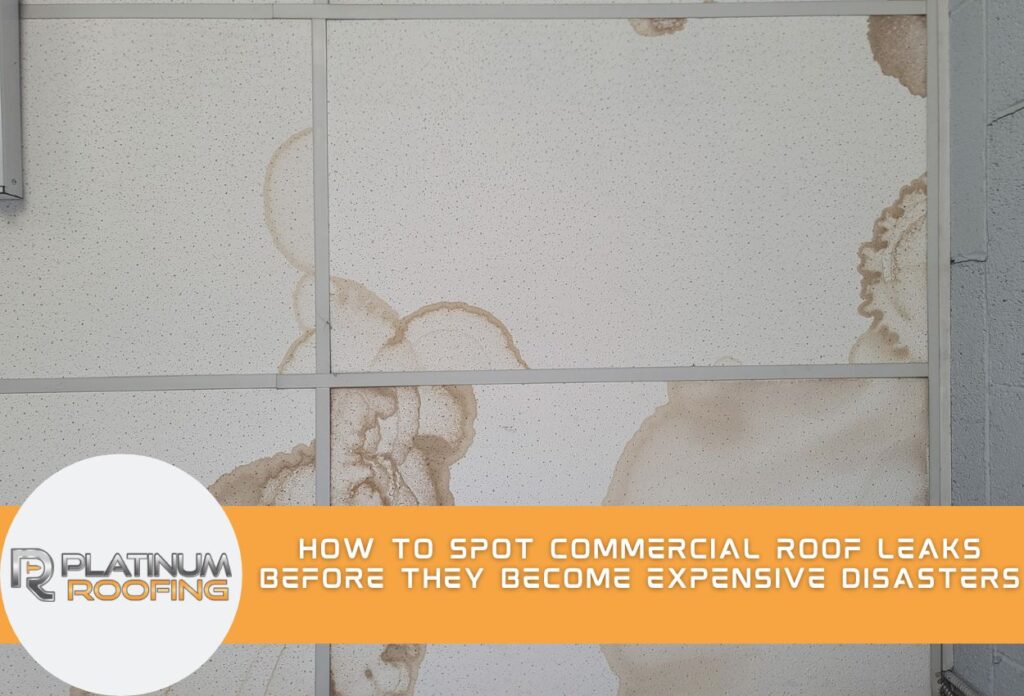
Water stains are one of the most reliable indicators when identifying signs of commercial roof damage. These discolored patches appear in various forms, each revealing different information about the leak’s severity and timeline. Fresh water stains typically show up as dark brown or yellow rings with wet centers, indicating active leaks that require immediate attention.
Older water damage is a bit different, showing faded brown or gray stains with crisp, defined edges and completely dry surfaces. These historical marks suggest previous leaking that may have been temporarily sealed but could reactivate during heavy rainfall. The size and intensity of stains directly correlate with the volume of water entering the building structure.
Active leaks create expanding stains that grow larger after each storm, while dormant damage stays in one general location over time. Property managers should monitor stain progression by photographing affected areas and comparing them monthly. Multiple small stains scattered across ceiling tiles often indicate widespread membrane deterioration rather than isolated punctures.
Flat roof leak detection becomes critical when stains appear near HVAC units, skylights, or roof gaps where water typically finds entry points. Discoloration accompanied by sagging ceiling materials, peeling paint, or visible water droplets signals immediate commercial roofing problems that demand professional assessment to prevent structural compromise and mold development.
Interior Warning Signs That Point to Roof Problems
Interior environmental changes often reveal signs of commercial roof damage long before visible water stains appear on surfaces. Musty odors throughout building spaces indicate moisture infiltration that creates ideal conditions for mold and mildew growth. These unpleasant smells typically concentrate near ventilation systems, storage areas, and upper floors where humid air accumulates from roof membrane breaches.
Increased humidity levels inside commercial buildings signal compromised roof integrity that allows external moisture to penetrate the structure. Property managers may notice condensation forming on windows, metal fixtures, or equipment that previously remained dry. This excess moisture creates uncomfortable working conditions and can damage sensitive electronics, inventory, and documents stored within the facility.
Mold growth represents a serious health hazard that develops quickly in moisture-rich environments created by ongoing roof leaks. Dark spots or fuzzy patches appearing on walls, ceiling tiles, or insulation materials require immediate professional remediation. The presence of mold spores can trigger respiratory problems for building occupants and create liability issues for property owners.
Structural damage shows itself through warped ceiling tiles and peeling paint or wallpaper throughout interior spaces. These physical changes occur when water repeatedly saturates building materials, causing them to expand and contract. Commercial roofing problems that allow consistent leaks eventually compromise the building’s structural integrity, requiring extensive repairs beyond simple flat roof leak detection and patching.
Exterior Roof Surface Red Flags You Can See from the Ground
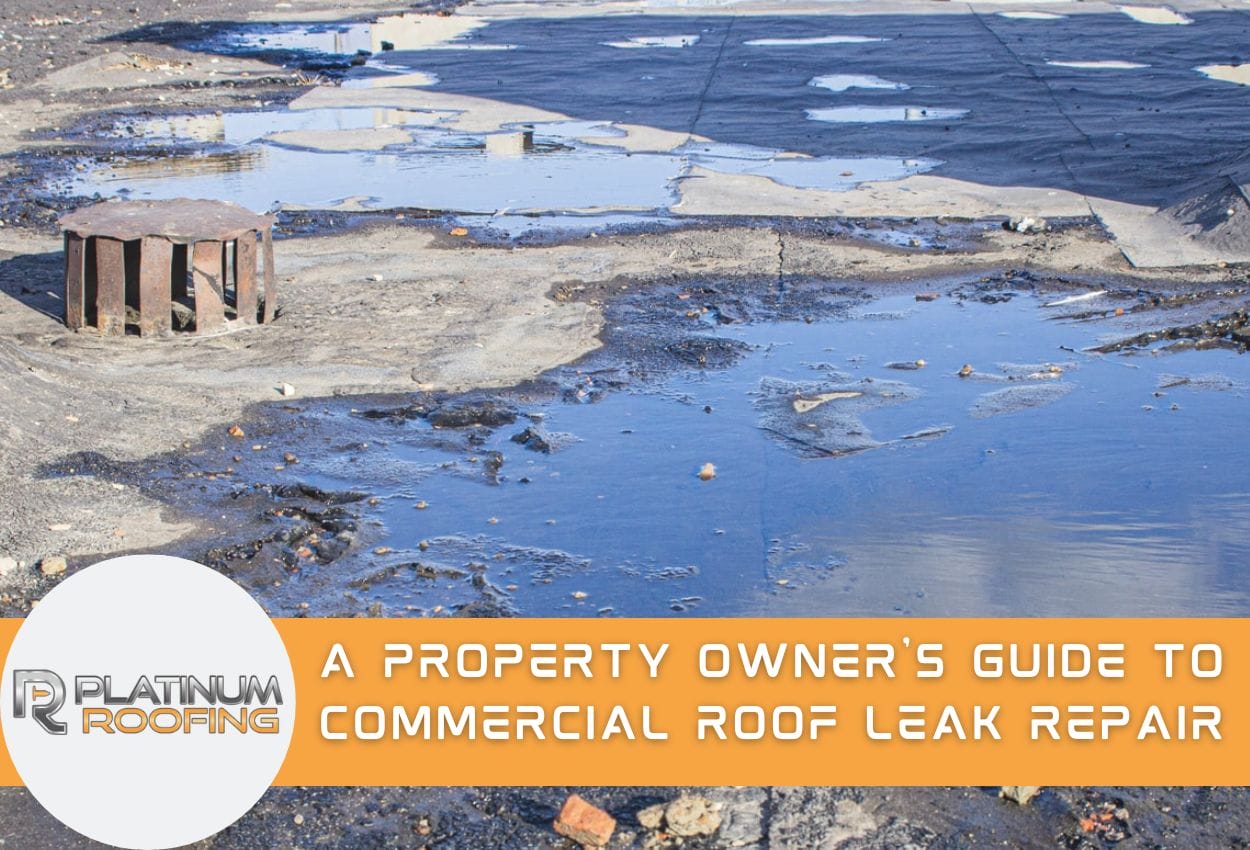
Visual inspection from ground level reveals critical signs of a leak that require immediate professional attention. Ponding water represents one of the most serious flat roof leak detection indicators, as standing water that remains on roof surfaces for more than 48 hours after rainfall signals inadequate drainage or structural settling that compromises membrane integrity.
Membrane bubbling creates visible raised areas across the roof surface where moisture has gone beneath the roofing materials. These bubbles indicate separation between roofing layers and often lead to complete membrane failure during temperature fluctuations. Large bubbles spanning several feet suggest extensive moisture infiltration that threatens the entire roofing system’s stability.
Visible cracks in roofing membranes appear as dark lines or splits that allow direct leaks into building structures. These fissures typically develop along seams, around gaps, or in high-stress areas where roofing materials experience repeated expansion and contraction. Even hairline cracks can channel significant amounts of water during heavy storms.
Damaged flashing around roof edges, vents, and equipment creates obvious entry points for water infiltration. Loose or missing flashing materials expose vulnerable joints where different building components meet. Debris accumulation in gutters, drains, and roof valleys blocks proper water flow and creates backup conditions that force moisture under roofing materials. These signs of commercial roof damage demand prompt repair to prevent minor issues from becoming major commercial roofing problems requiring complete system replacement.
Structural and Mechanical System Indicators of Roof Damage
Structural compromise from water infiltration creates some of the most dangerous signs of leaks that building owners must recognize immediately. Sagging ceiling areas indicate that roofing materials, insulation, and structural supports have absorbed excessive moisture over extended periods. These drooping sections pose serious safety risks to building occupants and signal advanced water damage that threatens the building’s structural integrity.
Ceiling tile damage manifests through warped, stained, or falling tiles that have lost their structural stability due to moisture saturation. Individual tiles may appear swollen, discolored, or completely separated from their mounting systems. When multiple ceiling tiles show simultaneous damage across different building areas, this pattern suggests widespread signs of commercial roof damage affecting large portions of the roofing system.
Compromises to the building’s framework can be seen through the beams warping, joint separation, or metal component corrosion in areas exposed to chronic moisture. Steel beams may show rust stains or flaking metal, while wooden structural elements exhibit rot, splitting, or insect infestation that occurs in moisture-rich environments. These framework issues require immediate professional evaluation to prevent catastrophic structural failure.
HVAC system problems frequently develop when roof leaks allow water to reach mechanical equipment, ductwork, or electrical connections. Equipment corrosion, reduced heating and cooling efficiency, and unusual system cycling often result from moisture infiltration that affects sensitive mechanical components. Electrical issues, including flickering lights, tripped breakers, or equipment malfunctions, commonly occur when flat roof leak detection has been delayed, allowing water to reach wiring systems and creating dangerous conditions throughout the building.
Seasonal and Weather-Related Signs to Monitor Year-Round
Weather patterns create predictable stress cycles that reveal some signs of commercial roof leaks throughout different seasons. Post-storm damage assessment becomes essential after severe weather events, as high winds, hail, and heavy rainfall expose existing vulnerabilities in commercial roofing systems. Property managers should conduct thorough flat roof leak detection within 24 hours of major storms to identify new damage before water infiltration begins.
Georgia and Alabama weather patterns present unique challenges for commercial roofing systems, with intense summer thunderstorms, occasional severe weather, and mild winter conditions that create distinct seasonal damage patterns. Summer heat causes roofing membranes to expand significantly, while cooler months create contraction that opens seams and stress points previously sealed by thermal expansion.
Freeze-thaw cycles pose significant threats even in moderate southern climates, as trapped moisture within roofing materials expands when temperatures drop below freezing. This expansion creates internal pressure that widens existing cracks and separates membrane layers. Commercial roofing problems intensify when these cycles repeat throughout winter, gradually compromising roof integrity and creating multiple entry points for water infiltration during spring rainfall.
When to Call Professional Roofers vs. DIY Inspection Methods
Property managers can safely perform basic visual inspections to identify obvious signs of commercial roof leaks without compromising their safety or voiding insurance coverage. Ground-level observations allow facility managers to document water stains, ceiling damage, and exterior membrane problems using smartphones or digital cameras to create detailed records for insurance claims and maintenance tracking.
Safe DIY inspection techniques include monitoring interior spaces for new water stains, photographing damaged ceiling tiles, and measuring the progression of existing damage over time. Property managers should maintain detailed inspection logs with dated photographs showing stain size, location, and severity to establish damage timelines for insurance documentation. These records prove invaluable when filing claims or demonstrating maintenance diligence to insurance carriers.
Professional intervention becomes necessary when structural sagging appears in ceiling areas, as these conditions indicate potential collapse risks that require immediate expert assessment. Electrical issues, extensive mold growth, or multiple active leaks demand specialized equipment and expertise that exceed safe DIY capabilities. Commercial roofing problems involving membrane bubbling, widespread ponding water, or damaged flashing require professional flat roof leak detection methods to prevent catastrophic failure.
Critical warning signs that mandate immediate professional response include visible ceiling movement, electrical malfunctions near water damage, or rapid expansion of water stains across large areas. When signs of commercial roof damage appear in multiple building zones simultaneously, this pattern suggests system-wide failure that requires emergency professional intervention to protect building integrity and occupant safety.
Recognizing the Signs of Commercial Roof Leaks in Georgia and Alabama
If you’re noticing any of the warning signs of a commercial roof leak, such as water stains, musty odors, or visible damage to your roof’s surface, it’s crucial to act quickly to avoid further damage and expensive repairs. Ignoring these signs can lead to severe structural issues, including compromised building frameworks and mechanical system failures. Platinum Roofing specializes in identifying and repairing commercial roof leaks effectively to ensure your property remains safe and functional.
Don’t let a small leak turn into a major disaster. Early detection and professional intervention can save you thousands in potential repair costs. If you’re in Georgia or Alabama and suspect your commercial roof may be leaking, call Platinum Roofing today at (229) 561-3107 for a thorough inspection and expert repair services.