

Commercial Roof Insulation: Essential Materials for Enhanced Energy Efficiency

Proper insulation stands out as one of the most critical parts of any commercial roofing system, especially in the hot, humid climates of Georgia and Alabama. With summer temperatures regularly exceeding 90 degrees Fahrenheit, and high humidity levels year-round, commercial buildings in these southern states face unique challenges that make selecting the right insulation materials for a roof essential for optimal building performance.
The kind of commercial roof insulation materials that are available on the market vary widely, from rigid board systems to spray foam applications, each offering different benefits for flat roof structures common in commercial construction. The right insulation not only maintains comfortable indoor temperatures, it significantly reduces energy consumption, which is a key consideration as energy costs continue to rise across the Southeast.
Building owners and facility managers must understand commercial building roof insulation R-values and how they apply to regional code requirements. Higher R-values provide greater thermal resistance, which is especially valuable during intense Georgia and Alabama summers when cooling systems work overtime.
Energy efficient commercial roof insulation options have expanded dramatically in recent years, giving property owners more choices than ever before. Whether it’s considering spray foam or rigid board commercial roof insulation, each material offers unique advantages depending on the building type, use, and budget constraints.
Rigid Board Insulation: The Commercial Roofing Standard
Rigid board insulation has established itself as the industry standard for commercial roofing projects throughout Georgia and Alabama. These durable, high-performance panels come in three primary types: polyisocyanurate (polyiso), extruded polystyrene (XPS), and expanded polystyrene (EPS).
Polyiso boards lead the commercial market with exceptional R-values of 5.6 to 5.8 per inch, making them ideal for meeting strict energy codes in southeastern commercial buildings. XPS boards offer excellent moisture resistance with R-values around 5.0 per inch, while EPS provides a cost-effective option at R-values of 3.6 to 4.2 per inch.
In flat roof applications common across Georgia and Alabama, rigid board installation typically involves mechanically fastening or adhering the panels directly to the roof deck before applying the roofing membrane. Tapered systems, which incorporate boards of varying thicknesses, create the slight slope that the roof needs for drainage, making it an essential consideration during heavy southern rainstorms.
Commercial roofing systems often utilize multiple layers of rigid insulation, with total thicknesses ranging from 2 to 6 inches depending on local building codes and energy efficiency goals. These boards work seamlessly with single-ply membranes like TPO and EPDM, creating durable, energy-efficient roofing systems that stand up to the challenging southeastern climate while helping building owners manage cooling costs year-round.
Spray Polyurethane Foam (SPF): Seamless Solution for Complex Roofs
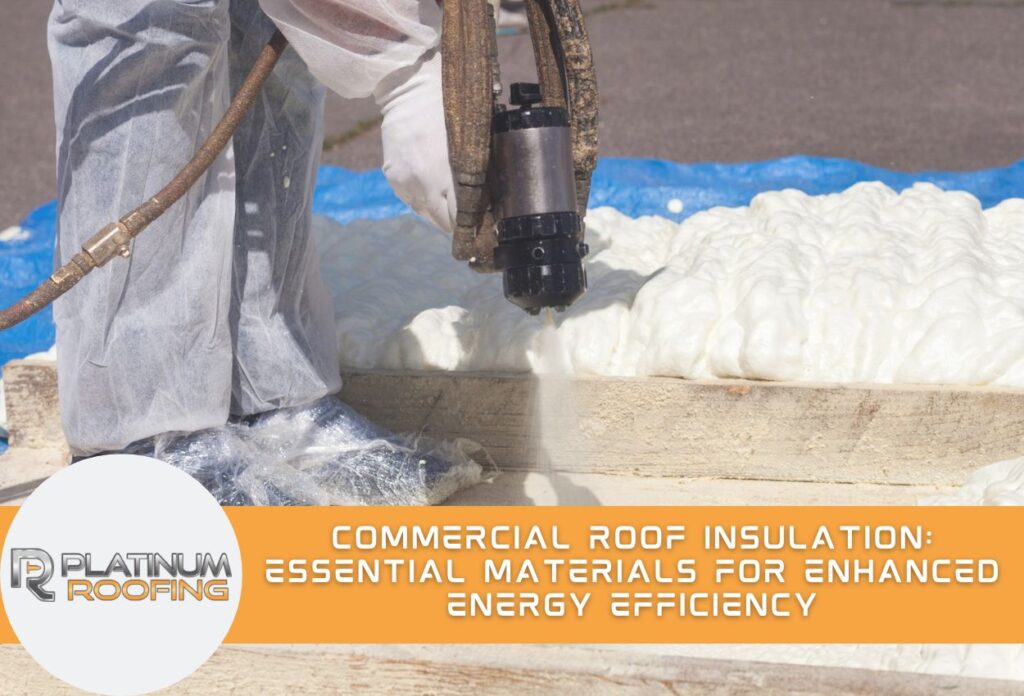
Spray Polyurethane Foam (SPF) offers commercial building owners a unique insulation solution that addresses many challenges created by Georgia and Alabama’s demanding climate conditions. Unlike rigid board systems, SPF creates a completely seamless layer that eliminates thermal bridging and potential leak points — a significant advantage during the region’s heavy periods of rain.
One of SPF’s most valuable qualities is its ability to conform to irregular surfaces and complex roof structures. The liquid application adheres to virtually any decking material, expanding to fill gaps and create an uninterrupted thermal barrier with R-values ranging from 6.0 to 7.0 per inch, which is among the highest of all commercial roof insulation materials.
For Georgia and Alabama buildings, SPF serves as both an insulation layer and air barrier, helping maintain consistent indoor temperatures despite extreme heat and humidity fluctuations. However, proper installation is critical, as spray foam requires specific temperature and humidity conditions during application to achieve optimal performance.
While SPF provides exceptional initial insulation properties, protecting it from UV degradation is essential in order to make it last in the South’s intense sunlight. This typically involves applying an elastomeric coating or protective covering that requires periodic maintenance inspections. When properly installed and maintained, SPF systems can outperform traditional insulation methods for commercial flat roofs while providing superior energy efficiency throughout our service region.
Mineral Wool and Fiberglass: Fire-Resistant Alternatives
When fire resistance is a top priority for commercial roofing projects, mineral wool and fiberglass insulation offer compelling alternatives to foam-based products. These materials provide exceptional thermal protection while excelling in fire safety ratings that can be crucial for many Georgia and Alabama commercial structures, particularly manufacturing facilities, schools, and healthcare buildings.
Mineral wool insulation, composed of rock or slag fibers, achieves impressive R-values of 3.7 to 4.2 per inch while withstanding temperatures up to 1,800 degrees Fahrenheit without releasing toxic smoke or contributing to the spread of fire. In high-humidity environments common throughout the Southeast, mineral wool performs admirably as it naturally repels moisture and resists mold growth.
Fiberglass insulation boards, meanwhile, deliver R-values between 3.7 and 4.3 per inch and feature non-combustible properties that enhance overall building safety. Both materials excel at reducing exterior noises, making them ideal choices for commercial roofs where noise reduction is important, such as office buildings near airports or busy roadways throughout Atlanta, Columbus, or Birmingham.
Installation typically involves mechanically fastening these materials to the roof deck, followed by appropriate vapor barriers to prevent moisture infiltration. For buildings with specialized acoustic requirements or strict fire-rating needs, these non-foam alternatives often represent the optimal balance of performance, safety, and value for commercial roof insulation projects across the Southeast.
Insulation R-Values: Meeting Commercial Building Codes and Energy Standards
Commercial buildings in Georgia and Alabama must adhere to specific insulation R-value requirements that vary by climate zone. Most of Georgia falls within climate zones 2,3, and 4, while Alabama spans zones 2A through 3A. For commercial flat roofs in these regions, minimum R-values typically range from R25 to R30, translating to approximately 4 to 6 inches of polyisocyanurate insulation or 5 to 7 inches of XPS rigid board.
Local code enforcement typically follows the International Energy Conservation Code (IECC) or ASHRAE 90.1 standards, which provide specific guidelines for continuous insulation in commercial roof construction. The required thickness increases as you move northward through these states, with northern Alabama having stricter requirements than coastal areas.
Going beyond the minimum requirements for building codes delivers significant benefits for commercial property owners. Upgrading from a minimum R-value of R30 to R38 can reduce cooling costs by 15% to 20% in our hot southern climate, which is particularly valuable for large warehouses, retail spaces, and office buildings with space on the roof. These improvements often qualify buildings for utility rebate programs through Georgia Power, Alabama Power, and other regional utilities.
Higher R-values may also contribute to ENERGY STAR certification or LEED points, enhancing property value and marketability. For commercial building owners planning long-term occupancy, the investment in premium insulation typically pays for itself through energy savings within 3 to 5 years while improving occupant comfort throughout the building’s lifetime.
Commercial Roof Insulation for Retrofits and Reroofing Projects
Evaluating existing insulation is a critical step when approaching commercial roof retrofits throughout Georgia and Alabama. Building owners often face the decision of whether to completely replace insulation or simply add additional layers to improve thermal performance. Our experienced inspectors use infrared scanning and moisture detection equipment to identify areas where insulation has become saturated or compressed, affecting its performance.
In many cases, partial replacement strategies prove more cost-effective than complete removal. Dry, intact insulation typically remains in place with new layers added above to meet current energy codes. This approach minimizes disruption to daily business operations, which is especially important for retail, healthcare, and manufacturing facilities across our service region.
Cover boards play an essential role in commercial roof retrofits, providing a stable base between existing and new insulation components. High-density polyiso or gypsum cover boards separate potentially damp existing materials and new insulation while enhancing overall system durability. For flat roof insulation upgrades, tapered systems can simultaneously improve drainage patterns while increasing thermal resistance.
Recovery systems allow commercial buildings to maintain operations during insulation improvements, with techniques like closed-cell spray foam applications over existing substrates providing exceptional thermal performance without requiring extensive demolition. When properly designed, these retrofit solutions deliver substantial improvements to energy efficiency while extending the overall lifespan of the roofing system for commercial buildings throughout the Southeast.
Selecting the Best Insulation for Your Commercial Roofing Project
Choosing the right insulation for your commercial roof requires careful evaluation of multiple factors specific to your building’s needs and local weather patterns. The best insulation solution balances the initial investment against long-term performance, particularly in Georgia and Alabama, where high heat, humidity, and occasional severe weather patterns demand specialized consideration. Different types of buildings play a crucial role. For example, warehouses with minimal climate control have different requirements than hospitals or data centers requiring precise temperature regulation.
The design and structure of the roof significantly impacts the type of insulation you’ll select, with metal roof decks typically requiring rigid board insulation, while concrete decks may benefit from lightweight options like EPS. Budget considerations should extend beyond initial installation costs to include lifecycle expenses, energy savings, and potential utility rebates available throughout the Southeast. Commercial building owners should establish clear goals related to performance, such as R-value requirements, moisture resistance, and durability expectations before making final selections.
Working with qualified commercial roofing contractors ensures that the right type of insulation is chosen and installed. When selecting a roofing partner in Georgia or Alabama, verify they hold appropriate state licensing and manufacturer certifications for commercial systems. Ask potential contractors about their experience with similar buildings in your area and request documentation of completed commercial insulation projects. Professional contractors should offer comprehensive proposals detailing the type of insulation used, thicknesses, attachment methods, and expected R-values rather than vague specifications.
The best contractors will conduct thorough site assessments, including core sampling of existing roofs during replacement projects, to identify moisture issues before recommending specific commercial roof insulation solutions tailored to your building’s unique requirements.
Ensure Insulation Is Properly Installed with Platinum Roofing
When considering commercial roof insulation in Georgia and Alabama, selecting the right materials and installation methods is crucial for optimal performance and energy efficiency. At Platinum Roofing, we specialize in top-tier insulation solutions that meet the unique challenges of the southeastern climate. Whether you’re installing new insulation or upgrading during a reroofing project, our expert team is here to guide you every step of the way.
Don’t let the hot, humid weather compromise your building’s comfort and efficiency. Call us today at (229) 561-3107 to discuss your commercial roofing insulation needs and discover how we can help you achieve the best results for your project. Let Platinum Roofing be your partner in building a more energy-efficient future.